About this research

MOHRI Ikuko
- United Graduate School of Child Development, the University of Osaka, Kanazawa University, Hamamatsu University School of Medicine, Chiba University and University of Fukui
- Professor

\Protect Japanese children from sleep deprivation/Restricting digital device use before bedtime and keeping a fixed bedtime help protect children’s sleep duration
- We identified that academic workload and the use of digital devices shorten weekday sleep duration and increase sleep debt, whereas outdoor play and bedtime routines are associated with longer sleep duration and reduced sleep debt.
- Based on a survey of over 4,000 children, we found that the mean weekday sleep duration was 9 hours 16 minutes for Japanese elementary school children, leading to the accumulation of sleep debt.
- We demonstrated that household rules—such as restriction on the use of digital devices during the hour before bedtime and a fixed bedtime—effectively safeguard children's sleep duration.
Outlines
A research group including Specially Appointed Researcher S Kanako Kawamura, Professor Ikuko Mohri, and Specially Appointed Professor (Full-time) Masako Taniike of the United Graduate School of Child Development, the University of Osaka, Kanazawa University, Hamamatsu University School of Medicine, Chiba University and University of Fukui conducted a large-scale survey of 4,273 caregivers of Japanese elementary school children and revealed the extent of children's sleep debt—reflected in longer sleep durations on weekends to compensate for insufficient sleep on weekdays—as well as the important role of families in preventing it.
In this study, sleep debt was assessed using the difference between weekend and weekday sleep duration, known as social sleep restriction (SSR). Extended sleep on weekends to compensate for insufficient sleep on weekdays is considered an indicator of inadequate weekday sleep rather than simply additional rest. Furthermore, SSR has been reported to be associated with a range of health and developmental risks, including obesity, difficulties with emotional regulation, and poorer academic achievement.
The survey revealed that Japanese children sleep an average of only 9 hours and 16 minutes on weekdays, indicating the widespread presence of sleep debt in many households. Statistical analyses further demonstrated that household rules, such as limiting the use of digital devices during the hour before bedtime and maintaining a fixed bedtime, help preserve weekday sleep duration and consequently reduce SSR, which has been linked to various health risks.
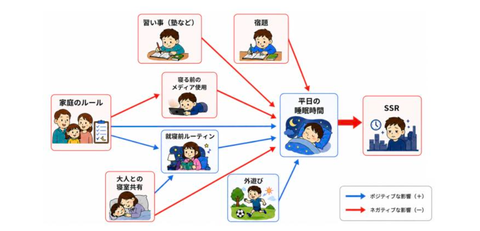
Fig.1 Lifestyle factors associated with children's sleep
Credit: Ikuko Mohri
Research Background
Sleep plays a vital role in maintaining physiological, cognitive, and emotional functioning. However, Japanese children have relatively short sleep durations compared with children worldwide, and the average sleep duration among elementary school children is close to the lower end of the recommended range of 9–11 hours per night. In Japan, academic workload—including homework and juku (cram school) attendance, where children often study under bright lighting until late at night—has been identified as a contributing factor to sleep insufficiency. Furthermore, the rapid spread of digital devices, including tablets and smartphones, has increased children's use of such devices before bedtime. The failure of household rules to keep pace with these changes has also contributed to insufficient sleep among children.
In Japan, more than 70% of elementary school children habitually share a bedroom with an adult. However, the effects of this sleeping arrangement on children's sleep have not yet been sufficiently elucidated.
Research Contents
Caregivers of 4273 children aged 6–12 years completed online questionnaires between November 2023 and March 2024. The mean weekday sleep duration of elementary school children was 9 hours and 16 minutes. Shorter weekday sleep duration was associated with homework, extracurricular lessons (e.g., cram schools), the use of digital devices during the hour before bedtime, and sharing a bedroom with adults. Regarding the type of digital device used, tablets and smartphones—which are interactive and used at close range—showed a more pronounced association with reduced sleep duration than watching videos on television.
In contrast, bedtime routines such as being read to, reading books, and playing outdoors were associated with longer weekday sleep duration. Regarding the difference between weekend and weekday sleep duration (social sleep restriction [SSR]), the average difference was 30 minutes, and 6.6% of children exhibited an SSR of two hours or more. The findings also revealed that insufficient sleep on weekdays was strongly associated with greater SSR.
Family rules, such as restricting the use of digital devices before bedtime and maintaining a fixed bedtime, were associated with longer weekday sleep duration and reduced SSR. While sharing a bedroom with adults was identified as a factor contributing to shorter sleep duration, it was also associated with beneficial effects, including promoting bedtime routines and reducing excessive sleeping in on weekends.
Social Impacts
Extended sleep on weekends is not simply a form of recovery, but an indicator of insufficient sleep on weekdays. The findings of this study suggest that promoting healthy child development requires viewing and protecting children’s sleep rights.
Although it may be difficult to modify cultural factors such as juku (cram school) attendance and bedroom sharing with adults, our findings highlight that family rules—such as restricting digital device use during the hour before bedtime and maintaining a fixed bedtime—play a critical role in protecting children's sleep amid increasing digitalization and academic pressures. In this sense, such rules function as an important protective shield against factors that contribute to sleep loss.
Notes
The article, “A cross-sectional, web-based survey on sleep duration and social sleep restriction by daily habits in Japanese children: Cultural considerations,” was published in the international scientific journal Sleep Medicine (online) at DOI: https://doi.org/10.1016/j.sleep.2026.109054