About this research

TIAN Yushi
- Graduate School of Pharmaceutical Sciences
- Assistant Professor

Investigates the status of self-medication with over-the-counter (OTC) medicines after COVID-19 pandemic and explores the associated factors
- It has been clarified that personality traits (extroversion, agreeableness, etc.) and digital health literacy also influence self-medication, the practice of using OTC cold and cough medicines.
- Until now, analysis of psychological factors in surveys of OTC medicine usage has been limited, therefore, in this study, a survey was conducted that included multiple evaluation scales, such as personal attributes, psychological characteristics, and digital literacy, and the results were analyzed from multiple perspectives.
- As it was found that personal attributes, digital health literacy level, and personality traits may influence the use of OTC medicines and subsequent medical consultation behavior, the promotion of safe and appropriate use of OTC is expected.
Outlines
A research group including Assistant Professor Yushi Tian, Assistant Professor Asuka Hatabu, Professor Kenji Ikeda, and Professor Kaori Fukuzawa of the Graduate School of Pharmaceutical Sciences at the University of Osaka conducted an online survey of 1,086 adults in Japan and performed a multivariate logistic regression (LR) analysis in order to investigate the status regarding self-medication with OTC cold and cough medicines and the associated factors of the participants.
Most of the surveys related to OTC medicine usage reported to date have mainly focused on actual usage, with limited reference to human factors (e.g., personality traits).
Analysis of this survey demonstrated that factors influence whether or not a person visits a medical institution include personal background such as age, residential area, educational background, marital status, type of insurance, whether or not they have underlying diseases, and regular visits to a doctor, as well as psychological factors such as personality traits (extroversion). In addition, it was revealed that adhering strictly to dosage instructions is closely related to agreeableness and the presence or absence of children in the family, while awareness of expiration dates is closely related to a high level of health information literacy, and thus factors associated with OTC medicine usage behavior have been identified.
The findings obtained in this study are expected to promote the safe and appropriate use of OTC medicines.
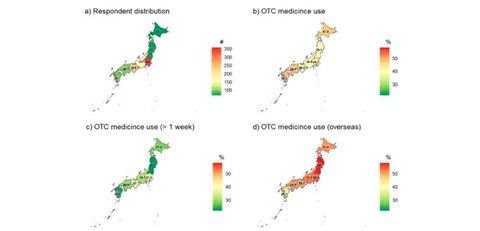
Fig. 1. a) Participant’s place of residence, b)-d) Response rate by prefecture
Research Background
Self-medication is the practice of taking care of oneself by managing one’s own health and using OTC medicines, rather than visiting a medical institution for minor diseases. Japan encourages self-medication as one of the efforts aimed at reducing medical costs. In addition, the COVID-19 pandemic has increased health awareness among Japanese people and led to significant changes in public health behavior regarding respiratory symptoms. However, there is limited investigation on factors influencing self-medication for minor diseases, including colds and coughs.
Research Contents
The research group conducted an online survey of 1,086 adults nationwide and comparatively analyzed self-medication patterns according to the progression of symptoms from the initial stage to the persistent stage.
Furthermore, the researchers investigated regional differences in OTC medicine usage by setting up two different situations where symptoms occurred, domestically or overseas. These results provide relatively large-scale fundamental data that indicates the use of OTC medicines after the COVID-19 pandemic. The survey results showed that approximately 43.6% of respondents stated that they would initially take OTC medicines at the onset of colds and coughs, and 61.7% would visit a hospital/clinic if the symptoms lasted for more than one week. Additionally, over 80% of the respondents replied that they would strictly follow the dosage and usage instructions for OTC medicines. The research team also focused on factors such as individual psychological characteristics and health awareness. The survey in this study included multiple assessment scales, such as personal attributes (age, residential area, educational background, etc.), psychological characteristics (TIPI-J, and the Japanese Adaptation of the General Self-Efficacy Scale), and digital literacy (eHealth Literacy Scale, the Media Use Scale (MUS)), in addition to the use of OTC medicines for symptoms such as colds and coughs, and then these were analyzed from five perspectives: "Factors that influence seeking medical advice," "Adhering strictly to dosage instructions," "Being aware of expiration dates," "Consulting medical personnel when uncertain about the appropriate medication choice," and "Referring to internet information when they are unsure which medicine to choose."
The results showed that the following specific factors have a significant impact on self-medication and appropriate use of OTC medicines:
1. The influence of personality traits on hospital/clinic visits
It was demonstrated that people with high extroversion (those who are sociable and love to interact with people) are more likely to seek medical advice when symptoms persist. This is because they are willing to seek the advice of medical personnels rather than relying solely on their own judgment, which may prevent the disease from becoming more severe or lead to earlier treatment.
2. The impact of eHealth Literacy Scale on usage of OTC medicines
People with high scores on the eHealth Literacy Scale (those who are good at searching for health information on the internet) tended to check the expiration dates of OTC medicines and to refer to internet information when they were unsure which medicine to choose. The ability to access accurate and reliable information is considered extremely important to conduct safe and effective self-medication.
3. People who are raising children tend not to strictly adhere to the usage and dosage instruction of OTC medicines.
People raising children were less likely to strictly adhere to the directions and dosages for OTC medications. This may lead to the risk of misuse within the home, so education and awareness-raising initiatives aimed at this demographic are considered important.
4. More people will choose to visit hospitals/clinics when traveling abroad
When traveling abroad, people are twice as likely to choose to visit a hospital/clinic than when they are in Japan. This may be because people feel more anxious about language barriers and the availability of medicines when they are abroad than they do at home. Future challenges include preparing information on OTC medicines for overseas travelers and responding to multiple languages, and it is required to develop globally to facilitate self-medication.
This study clarified that self-medication is related to individual characteristics such as personality and information literacy. Going forward, it is expected that safer and more effective self-medication will become more widespread by promoting education and awareness-raising initiatives that take these differences into account, and by developing an environment in which reliable medical information is available.
Social Impact of the Research
This study explored the use of OTC medicines after COVID-19 pandemic and the associated factors that may affect them. The results suggest that personal attributes, digital health literacy levels, and personality traits may influence the use of OTC medicines and subsequent medical consultation behavior. These findings may help promote the safe and appropriate use of OTC medicines.
Notes
The article, “Status and influencing factors of OTC medicine use for self-medication in cold and cough: a cross-sectional survey in Japan,” was published in BMC Public Health at DOI: https://doi.org/10.1186/s12889-025-23113-4.
