

Named after a respected mentor! Discovered two new species of dicyemids
Found 58 species off the coast of Japan in 25 years
- Two new species of dicyemids were discovered in an Octopus conispadiceus (Yanagidako) off the coast of Hokkaido.
- Until now, there have been no experts on dicyemids worldwide, and very few of their basic characteristics as living organisms have been elucidated. In this research, the richness of the Japanese fauna in the field of parasites was demonstrated by researching the coasts of Japan.
- By promoting deeper understanding of biodiversity, it is expected to foster interest in connection with nature and value of life, and encourage people to have awareness of the need to conserve the global environment and build a sustainable society in the future, and lay the foundation for building a healthy relationship between science and society.
Outlines
Professor Hidetaka Furuya of the Graduate School of Science at the University of Osaka has discovered two new species of dicyemids in an Octopus conispadiceus (Yanagidako) lives off the coast of Hokkaido and reported the findings in a paper. Professor Furuya has discovered approximately half of the species belonging to the Phylum Dicyemida (collectively known as dicyemids), many of which he discovered along the coasts of Japan. More than 50 species have been described to date, demonstrating globally how rich Japan's fauna is, even in the world of microscopic parasites.
One of the newly discovered species was named Dicyemennea tsunekii sp. nov out of deep respect for his mentor, Professor Kazuhiko Tsuneki, and the other was named Dicyemodeca shirarikaense sp. nov. after the town of Shiranuka where it was discovered.
Before the research began, there were no specialized researchers on dicyemid species, and very little was known about their basic characteristics as living organisms, including their evolutionary position, development, ecology, varieties, and even their genomes.
It is expected that this research results will deepen understanding of biodiversity, and foster interest in connections with nature and the value of life among all generations, and by contributing to environmental education, it will serve as the foundation for building a healthy relationship between science and society.
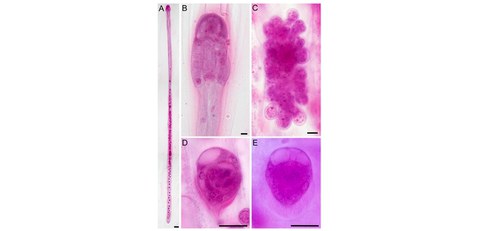
Fig 1. Characteristics of Dicyemennea tsunekii
A: Overall, B: Head, C: Gonads, D: Side view of larva, E: Ventral view of larva. Stained with hematoxylin and eosin. Bars indicate 50 μm (A) and 10 μm (B-E).
Research Background
The dicyemids that are the subject of this study live inside the renal cyst (i.e., in the urine) of benthic cephalopods (octopuses and cuttlefish). Since they do not cause any harm to the host, there is a possibility that they may have been living in symbiosis without realizing it. Dicyemids have the fewest number of cells among all multicellular animals, and have an extremely simple body system, lacking any organs such as a digestive tract, muscles, or nervous system. However, the recent research has revealed that dicyemids are animals that have specialized to adapt to a parasitic lifestyle. Before the research began, there were only 69 species of dicyemids in the world, and only four in Japan. Although they are independent animal phylum, there are no specialized researchers, and their basic characteristics as living organisms, such as their evolutionary position, development, ecology, varieties, and even their genome, have remained largely unknown. In such academic vacuum, Professor Furuya began his research with the aim of comprehensively elucidating the biological issues related to this animal phylum and clarifying its unique characteristics. Through systematic research and analysis, he aimed to reveal the overall picture of this animal phylum and establish the "biology of dicyemids."
Research Contents
Professor Furuya has conducted research on many cephalopods in order to clarify the diversity of species belonging to the Phylum Dicyemida. As a result, he has described approximately half of the species known globally to date, most of which were discovered off the coast of Japan. Professor Furuya has described over 50 species to date, demonstrating globally how rich Japan's fauna is, even in the world of microscopic parasites. Two new species of dicyemids in an Octopus conispadiceus (Yanagidako) living off the coast of Shiranuka Town, Hokkaido have recently been discovered and described. In the sub-zero temperatures of February, he dissected an octopus at Shiranuka Fishing Port and prepared a smear (Fig. 1). One of the species has been named Dicyemennea tsunekii as a sign of deep respect for his mentor, Professor Kazuhiko Tsuneki, who has provided him with guidance and support over the years.
In addition, in a previously published paper co-authored by Professor Tsuneki and Professor Furuya, they named the new species Dicyema koshidai after ProfessorYutaka Koshida, another his mentor.
These names are imbued with deep feelings, as if parents give names to their children, pouring the respect and gratitude to the respected metors into these small, nameless creatures.
The classification of dicyemids is carried out by clarifying and describing the external morphology of larvae and adults, as well as the types of cells that make up their bodies. A unique property of this animal is that the number of cells that make up the larvae and adults is known to be constant for each species, and this characteristic is used for classification, so the number of cells is also counted. Because individuals are too small to be observed with the naked eye, an optical microscope is used to observe characteristics that distinguish species, such as the number, arrangement, and shape (conical, hemispherical, disc-shaped, irregular) of cells that make up the head, the number and size of gonads, and the number of gametes (eggs and sperm).
Social Impact of the Research
The results of this research demonstrate that basic research on Japan's rich fauna has not only natural scientific significance, but also the potential to make a significant contribution to human society through the finding of undiscovered biological resources, elucidation of the mechanisms that maintain ecosystems, and even the conservation of endemic species and the development of management methods. In addition, deepening understanding of biodiversity will provide an opportunity for people of all generations, to develop an interest in their connection with nature and the value of life, thereby contributing to the enhancement of environmental education. It is expected that the accumulation and sharing of such knowledge will foster awareness towards the future conservation of the global environment and the realization of a sustainable society and will serve as the foundation for building a healthy relationship between science and society.
Notes
The article, “Two new species of dicyemids (Phylum Dicyemida) from Octopus conispadiceus (Mollusca: Cephalopoda: Octopoda) in Japanese Waters,” was published in Species Diversity at DOI: https://doi.org/10.12782/specdiv.30.135